
Key Takeaways
- A construction site safety plan identifies hazards and establishes clear procedures for protecting workers.
- Safety responsibilities should be assigned clearly to managers, supervisors, and workers.
- Site-specific hazard assessments should reflect the actual conditions and activities of each project.
- Plans should cover PPE, fall protection, equipment safety, emergency response, and worker training.
- Regular inspections and updates help keep safety procedures effective as the project changes.
- Workers should be encouraged to report hazards, near misses, and unsafe conditions.
- A strong safety culture combines clear procedures with communication, training, and effective leadership.
Construction sites are busy, changing environments where workers, equipment, materials, and vehicles often operate in the same space. Without clear safety procedures, even a routine task can create serious risks.
A construction site safety plan helps a company identify hazards, explain safe work procedures, assign responsibilities, and prepare workers to respond to emergencies. It also gives supervisors and workers a common set of expectations for maintaining a safe job site.
A strong safety plan is not simply a document created to meet a requirement. It should be a practical tool that workers can understand and use every day.
Whether you manage a small construction company or oversee a large project, understanding what belongs in a safety plan can help reduce risks, improve communication, and support a stronger safety culture.
What Is a Construction Site Safety Plan?
A construction site safety plan is a written document that explains how safety will be managed during a construction project. It identifies potential hazards, establishes safety procedures, assigns responsibilities, and describes how the company will respond to accidents and emergencies.
The exact contents can vary depending on the project, location, type of construction, and risks involved.
In the United States, employers must comply with applicable Occupational Safety and Health Administration (OSHA) requirements. OSHA’s construction standards cover many areas, including fall protection, scaffolding, excavation, electrical safety, personal protective equipment, and more. (osha.gov)
A site safety plan brings these requirements together with the specific risks and procedures for an individual project.
Why Does a Construction Site Need a Safety Plan?
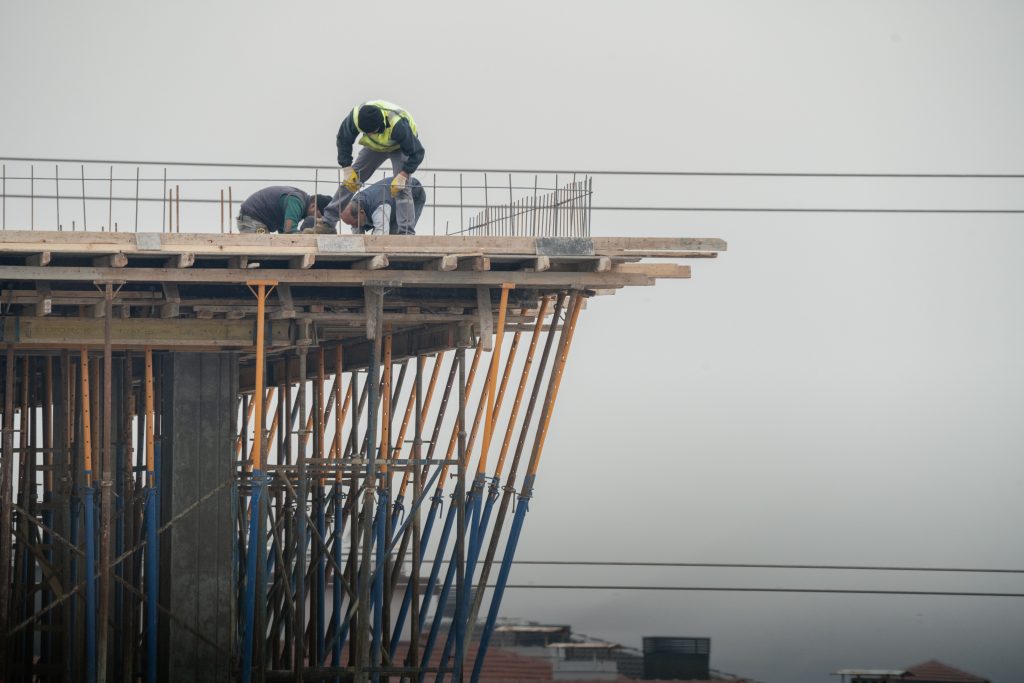
Construction work involves many hazards. Workers may operate heavy machinery, work at heights, enter confined spaces, handle hazardous materials, or work near electrical systems.
A safety plan helps identify these risks before work begins.
It can also help a company:
- Reduce workplace injuries and illnesses
- Clarify safety responsibilities
- Improve communication between workers and supervisors
- Prepare for emergencies
- Establish consistent work procedures
- Support required safety training
- Document safety processes
- Improve project organization
- Build trust with clients and workers
A written plan also gives workers a reference point. Instead of relying entirely on verbal instructions, employees can review procedures and understand what is expected.
Who Is Responsible for the Safety Plan?
Safety is a shared responsibility, but someone should have clear ownership of the plan.
Depending on the company and project, responsibility may fall to a safety manager, project manager, site superintendent, or another qualified person.
The person responsible for safety should understand the hazards associated with the project and have enough authority to address unsafe conditions.
Supervisors also play an important role. They are often closest to the day-to-day work and can identify changing conditions that may require updates to the safety plan.
Workers should also be encouraged to report hazards and raise safety concerns without fear of retaliation.
A safety plan works best when everyone understands their role.
Common Requirements of a Construction Safety Plan
While plans vary between projects, several sections are commonly included.
1. Project Information
Start with basic information about the project.
This section can include:
- Project name
- Job site address
- Owner or client
- General contractor
- Subcontractors
- Project manager
- Site supervisor
- Emergency contacts
- Expected project dates
This information helps establish who is responsible for the project and who should be contacted when questions or emergencies arise.
2. Safety Responsibilities
The plan should explain who handles different safety duties.
For example, it may identify who is responsible for:
- Conducting site inspections
- Leading safety meetings
- Providing worker training
- Investigating incidents
- Maintaining safety records
- Reporting hazards
- Managing emergency procedures
- Reviewing the safety plan
Clear responsibilities help prevent situations where everyone assumes someone else is handling a safety issue.
3. Hazard Identification and Risk Assessment
Hazard identification is one of the most important parts of a safety plan.
Before work begins, the project team should identify hazards associated with the site and planned activities.
Common construction hazards include:
- Falls from elevated surfaces
- Falling objects
- Moving equipment
- Electrical hazards
- Excavation and trench collapse
- Hazardous chemicals
- Excessive noise
- Dust and airborne particles
- Fires
- Heat and cold exposure
- Vehicle traffic
- Confined spaces
OSHA’s construction standards address many of these hazards and establish requirements for protecting workers. (osha.gov)
The risk assessment should consider both the likelihood of an incident and the potential severity of the outcome.
4. Site-Specific Safety Procedures
A generic safety document is not enough for every construction project.
A site safety plan should reflect actual conditions at the job site.
For example, a high-rise construction project may need detailed procedures for fall protection, cranes, scaffolds, and material handling. An excavation project may require more attention to trench safety, underground utilities, soil conditions, and access.
Site-specific procedures should explain how workers will safely perform high-risk tasks.
They should also be updated when conditions change.
5. Personal Protective Equipment
The plan should identify the personal protective equipment, or PPE, workers need for specific tasks.
Common PPE includes:
- Hard hats
- Safety glasses
- Gloves
- High-visibility clothing
- Hearing protection
- Protective footwear
- Respirators
- Fall protection equipment
OSHA requires employers to provide appropriate PPE when workers are exposed to certain workplace hazards, and employers must ensure that workers use appropriate protective equipment. (osha.gov)
PPE should not be treated as the only safety measure. Employers should first look for ways to eliminate or reduce hazards through safer equipment, engineering controls, and work practices when possible.
6. Fall Protection
Falls are a major concern in construction.
The safety plan should explain how workers will be protected when working at elevated locations or around openings and edges.
Depending on the work, protection may include guardrails, safety nets, personal fall arrest systems, or other approved methods.
OSHA’s construction standards include specific requirements for fall protection, including requirements for certain work performed at elevated heights. (osha.gov)
Workers should also receive training on how to use fall protection equipment correctly.
7. Equipment and Tool Safety
Construction sites may contain cranes, forklifts, excavators, lifts, saws, drills, compressors, and many other tools and machines.
The safety plan should address equipment inspection, operation, maintenance, and training.
Only properly trained and authorized workers should operate equipment that requires specialized knowledge.
Workers should also know how to report damaged tools or equipment.
A simple rule is useful:
If equipment appears unsafe, stop using it and report the problem.
Regular inspections can help identify problems before they lead to an accident.
8. Emergency Response Procedures
Every construction site should have a clear emergency plan.
Workers should know what to do during events such as:
- Serious injuries
- Fires
- Chemical spills
- Electrical incidents
- Severe weather
- Structural failures
- Equipment accidents
- Other site emergencies
The plan should include emergency contact information, evacuation procedures, assembly areas, first-aid arrangements, and directions to medical facilities when appropriate.
Emergency procedures should not simply sit in a document. Workers should be trained on them so they know how to respond when something goes wrong.
9. First Aid and Medical Response
The safety plan should explain how workers can access first aid and medical assistance.
OSHA requires employers to provide medical services and first aid as required by applicable standards and workplace conditions. (osha.gov)
Depending on the project, the site may need trained first-aid responders, first-aid supplies, emergency communication equipment, or other resources.
Workers should know where first-aid supplies are located and how to contact emergency services.
10. Safety Training and Communication
Even the best safety plan is ineffective if workers do not understand it.
New employees should receive appropriate orientation before starting work. Workers should also receive training relevant to their specific tasks and hazards.
Regular toolbox talks or safety meetings can reinforce important procedures.
Keep safety communication clear and practical. Avoid filling workers’ time with complicated language that does not help them understand what to do.
Training should explain:
- What the hazard is
- Why it matters
- How to avoid it
- What protective equipment is required
- What to do if something goes wrong
Good communication also means listening. Workers often notice hazards that supervisors may not see.
Best Practices for Managing a Safety Plan
Creating a safety plan is only the first step. The plan must be used and maintained throughout the project.
Review the Plan Before Work Begins
Before construction starts, review the plan with key project leaders.
Make sure the procedures match actual site conditions and planned activities.
Update the Plan When Conditions Change
Construction sites change constantly.
New subcontractors may arrive. Equipment may change. Work may move to another area. Weather conditions may affect operations.
Update the safety plan when significant changes introduce new hazards.
Conduct Regular Site Inspections
Routine inspections can help identify unsafe conditions before they result in injuries.
Look for issues such as:
- Blocked walkways
- Missing guardrails
- Poor housekeeping
- Damaged equipment
- Exposed electrical hazards
- Improperly stored materials
- Unsecured ladders
- Missing PPE
Document important findings and assign someone to correct them.
Encourage Workers to Report Hazards
Workers should feel comfortable reporting hazards.
A strong safety culture does not punish employees for bringing attention to problems. Instead, management should treat reports as opportunities to improve the site.
Anonymous reporting options may also be useful in some organizations.
Learn From Incidents and Near Misses
An incident does not have to cause an injury to provide an important safety lesson.
Near misses can reveal weaknesses in procedures before someone gets hurt.
After an incident or near miss, determine what happened, why it happened, and what can be changed to prevent a similar event.
Focus on improving systems rather than simply blaming individuals.
Safety Plans and Strong Construction Teams
A safe job site depends on more than written procedures. It also depends on people who communicate well, follow procedures, and look out for one another.
This is one reason construction companies should think carefully about hiring, training, leadership, and communication. Learning how to build a professional team for a business can help leaders create a workforce that understands expectations and works together effectively.
Strong teams make it easier to identify hazards, communicate changes, and respond to problems quickly.
Managers should look for employees who take safety seriously and are willing to speak up when something does not look right.
Keep the Safety Plan Practical
A safety plan should be detailed enough to address important risks but simple enough for workers to use.
Avoid creating a document that is so long and complicated that employees never read it.
Use clear headings, short sections, checklists, diagrams, and straightforward instructions when appropriate.
Keep important emergency information easy to find.
The plan should support the work rather than create unnecessary paperwork.
Create a Culture of Safety
The most effective construction safety plans are part of a larger safety culture.
Management needs to demonstrate that safety is a real priority. Supervisors should follow the same rules they expect workers to follow. Workers should have the tools and training needed to work safely.
Safety should also be discussed throughout the project rather than only after an incident.
When workers see that management takes concerns seriously, they are more likely to participate in safety efforts.
Conclusion
A construction site safety plan is a practical framework for identifying hazards, protecting workers, managing emergencies, and creating clear safety expectations.
While the exact requirements depend on the project and applicable regulations, most effective plans address key areas such as hazard identification, worker responsibilities, PPE, fall protection, equipment safety, emergency response, training, and inspections.
The plan should also change as the project changes. Regular inspections, worker feedback, incident reviews, and updated procedures can help keep safety practices relevant.
Most importantly, a safety plan should not be treated as a document that exists only to satisfy a requirement. It should be a working part of the project.
When construction companies combine a clear safety plan with strong leadership, effective communication, proper training, and a team-focused culture, they can create safer and more organized job sites while building a stronger foundation for long-term business success.